
History
The History of Mohican Apartments: A New London Landmark Since 1896
For more than 125 years, the iconic building at 281 State Street in New London, CT has played an important role in the city's history. Today, Mohican Apartments provides affordable senior living within one of downtown New London's most recognizable historic landmarks, but its story began long before it became a residential community.
Originally constructed in 1896, the building has served as a publishing headquarters, a celebrated hotel, a commercial destination, and now an apartment community. Through each chapter, it has remained a defining part of the New London skyline and a lasting symbol of the city's evolution, making it one of the most distinctive historic apartments in New London today.
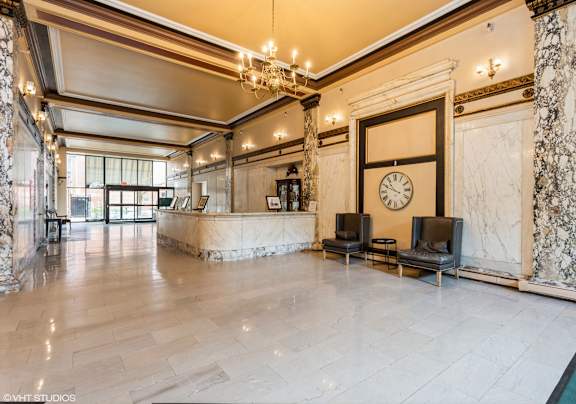
From Publishing Empire to New London Landmark
The building now known as Mohican Apartments was originally constructed as the Munsey Building, commissioned by publishing entrepreneur Frank A. Munsey, founder of the nationally recognized Munsey's Magazine. Seeking to expand his publishing operations, Munsey selected New London as the home of a new business venture and completed the building in 1896.
Designed by the Architect of Carnegie Hall
The building was designed by renowned architect William Burnet Tuthill, best known for designing New York City's Carnegie Hall. Its innovative steel-frame construction was considered a modern engineering achievement at the time and helped establish the property as one of the most impressive buildings in downtown New London.
A Grand Hotel for a Growing City
In 1898, the former publishing building was transformed into the Mohican Hotel, ushering in a new era for the property. Positioned between Boston and New York City, New London was an important transportation and commercial hub, and the hotel became a destination for travelers and visitors passing through New London's busy transportation corridor between Boston and New York.
As downtown New London continued to grow, the Mohican Hotel earned a reputation as one of southeastern Connecticut's most respected and recognizable hotels.
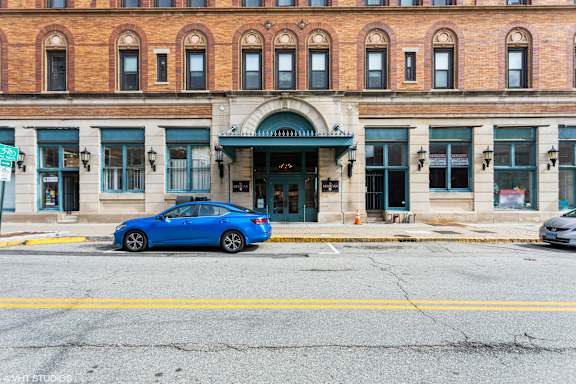
DESIGNED BY A RENOWNED ARCHITECT
Architectural Legacy
The Mohican stands as an enduring example of late nineteenth-century architecture. More than a century later, its distinctive design continues to make it one of the most recognizable historic buildings in New London, CT.
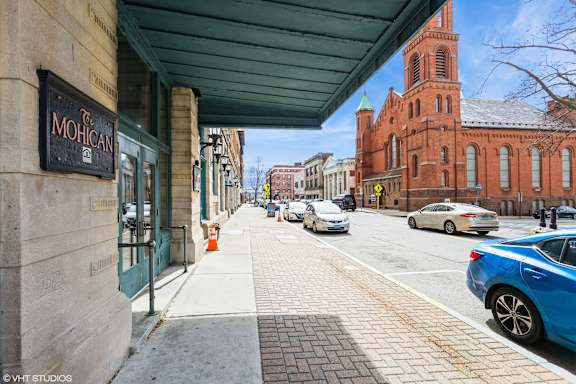
ONE OF CONNECTICUT'S PREMIER HOTELS
A Destination for Travelers
Following its conversion into the Mohican Hotel, the property welcomed guests from throughout New England and beyond. Expanded with additional floors and a rooftop garden, the hotel became known as one of Connecticut's premier hospitality destinations during the early twentieth century.
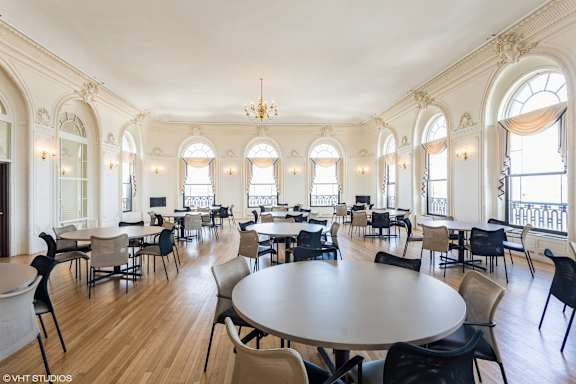
OVER 125 YEARS OF HISTORY
Preserved for Future Generations
Rather than being lost to redevelopment, this historic New London landmark was carefully preserved and adapted into the Mohican Apartments community. Today, the building remains a treasured part of the city's architectural heritage while continuing to serve residents in the heart of downtown.
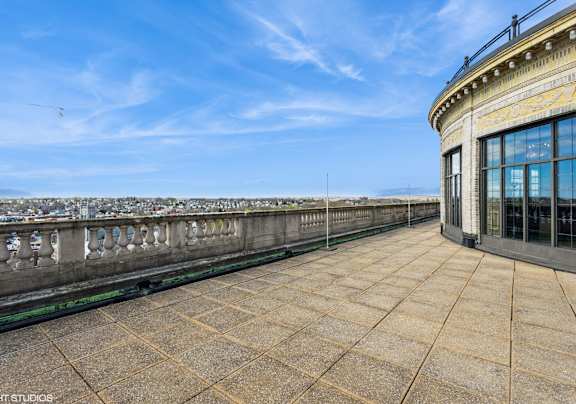
A Legacy That Lives On
For more than a century, the Mohican has stood as a symbol of New London's growth, resilience, and rich architectural history. From its beginnings as the Munsey Building to its celebrated years as the Mohican Hotel and its transformation into today's apartment community, the property has continuously evolved while preserving the character that makes it unique. Today, Mohican Apartments carries that legacy forward by offering affordable, comfortable senior living in New London, CT, within one of the city's most historic landmarks.
Historic Charm, Modern Comfort
Today, Mohican Apartments provides affordable senior living within a historic landmark in downtown New London. Located in the heart of downtown, the property provides easy access to local dining, shopping, entertainment, and waterfront attractions while preserving the legacy of one of New London's most storied landmarks.
More than 125 years after its construction, the Mohican remains a proud reminder of the city's past and a welcoming place to call home for generations to come.